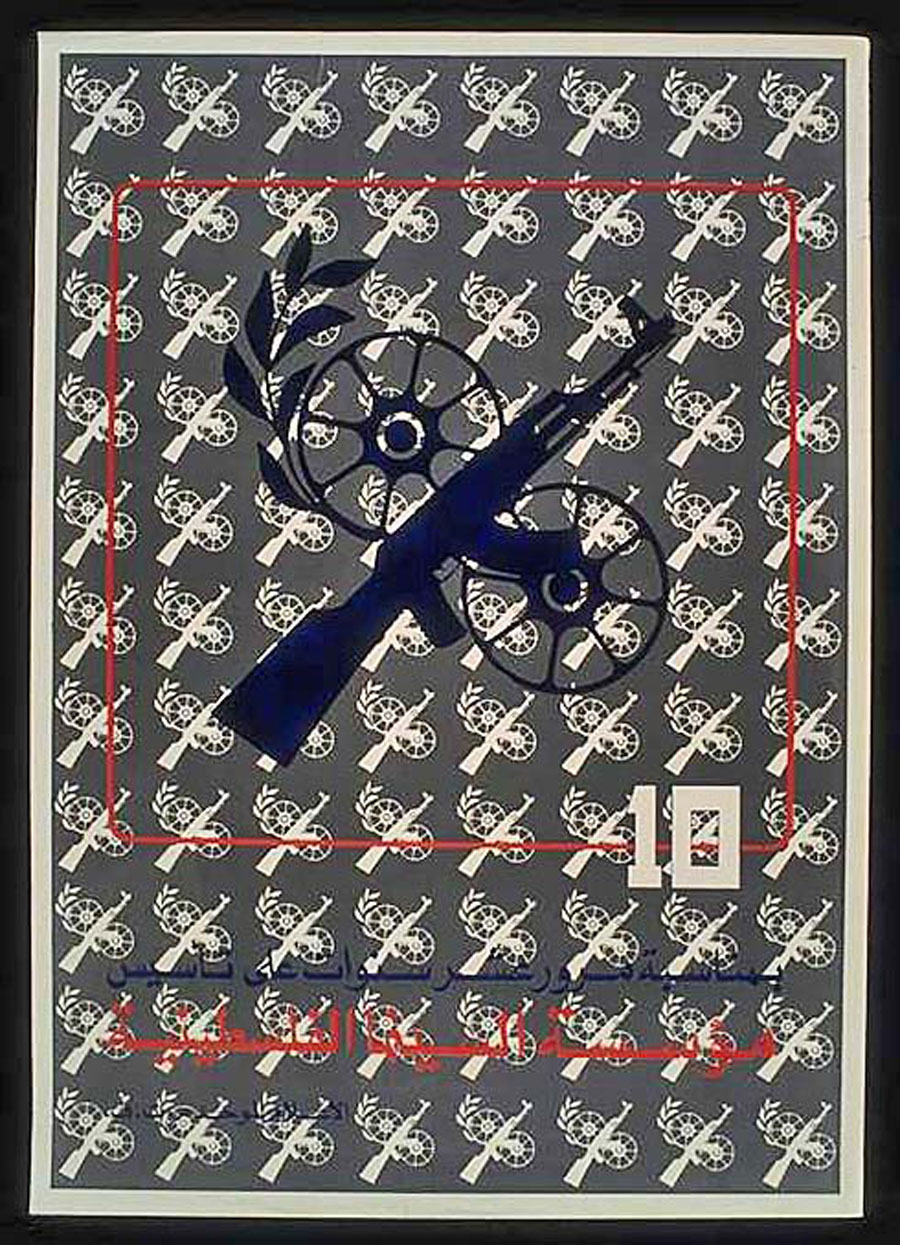
Palestine will win (1969)
Origin: France | Documentary | Director: Jean-Pierre Olivier de Sardan | 28 minutes
While researching the influence of the changing international scene of 1968 on the newly formed film group of the Palestinian revolution, the name of Jean-Pierre Olivier de Sardan came up as one of the first filmmakers in France to make a film about the Palestinian revolution.
"I was also very drawn in by the Palestinian issue. I didn't try to make a big film, but just wanted to have a propaganda film, an intelligent one and, in fact, that is how it worked out. At that time, support for the Palestinian struggle was growing, so there were many activist committees that needed such a film.
I've been told it was not only in France, but also in Germany, so it served as very good support for all of these committees around the world. I think the film has been viewed by thousands and thousands of people. The whole thing was just shots of photographs that were hung on the wall. That was the whole
film and we didn't have an archive. Mahmud Hamshari and Eiz Eldien Qalaq tried to find us as many photos as they could from Palestine, then we chose from them, put them on the wall, and that was it. At the end, we used a real archive of Vietnam, which I think I took from Joris Ivans."
The film was called Palestine Will Win. After the victory in Al Karameh, many Palestinians joined the militant factions of the Palestine Liberation Organisation (PLO). The PLO became the representative of the Palestinian people and of their struggle by uniting the different political movements under its umbrella (Al Fatah, Popular Front for the Liberation of Palestine - PFLP, Democratic Front for the Liberation of Palestine - DFLP). It successfully mobilised international support for the revolution, which was financed by a number of friendly countries and regimes. In turn, this meant that a whole spectrum of ideological practices was running through the PLO and the revolution. In Al Fatah alone, there were groups who affiliated themselves with the Maoist ideology, others with Arab nationalism, some with the formal Soviet ideology- the so-called Moscow line - and those who associated with the right wing of the Islamic Brotherhood.
Watch full version: https://www.youtube.com/watch?v=QRRV1Zs59_Q
View trailer